






Is Brand Loyalty Shifting? What Indian Watch Buyers Want in 2026

For decades, the Indian watch buyer followed a simple script: save up, visit a showroom, and pick a name that had been imported from Europe or trusted across generations. Swiss on the dial meant quality. A foreign name meant prestige. Indian-made was the fallback, not the aspiration.
That script is being rewritten in 2026, and the numbers prove it.
India's watch market reached USD 6.4 billion in 2024 and is projected to grow to USD 10.2 billion by 2033, at a steady CAGR of 5.1% (IMARC Group, 2025). But inside that growth story lies a more interesting shift: the mid-range segment — ₹1,500 to ₹5,000 — is now the fastest-growing price band, driven almost entirely by young, urban, digitally native buyers who are choosing quality, story, and design over inherited brand names. And a growing share of those buyers are choosing Indian.
The Old Logic of Watch Loyalty — And How Sylvi Redefines It
Watch loyalty in India didn't just happen. It was built — carefully, over decades — on two things that felt very real to very many people: legacy and aspiration.
Legacy meant trusting a name your parents trusted before you. Families passed down watch preferences the way they passed down advice — without questioning it much, because the trust had already been earned across enough years to feel permanent. Sub-brands expanded that universe further, from students to working professionals, until an entire generation grew up believing that loyalty to a familiar name was simply the sensible choice.
Aspiration worked differently. It wasn't about trust — it was about signal. An imported watch said something. It said you had taste, or ambition, or at least the means to reach beyond the obvious. The logic was rarely examined: foreign meant elevated, and elevated meant worth it.

For a long time, this worked.
But loyalty built on inherited trust or foreign appeal can only hold so long before someone starts asking the uncomfortable questions:
-
Is the quality actually better, or just easier to assume?
-
Am I paying for what's inside the watch, or just what's on the box?
-
Does this piece actually say something about who I am — or who someone else thought I should want to be?
As Indian buyers got sharper, more design-aware, and more willing to question the rules they'd inherited, the old logic quietly started to crack.
Where Sylvi Changes the Narrative
Sylvi doesn't try to win on legacy it hasn't earned yet. It doesn't chase the validation of an imported tag. It builds loyalty on something more straightforward – giving people a watch they actually want to wear at a price that doesn't require justification.
That means clean dials and durable builds that prove themselves without a heritage story to lean on. It means design that ranges from understated minimalism to sports-influenced boldness — not because either is trending, but because different people want different things and deserve both done well. It means thinking about Indian occasions, Indian wardrobes, and Indian lifestyles rather than lifting a template from elsewhere and calling it universal. And it means an accessible price point that doesn't ask buyers to pay for decades of advertising disguised as craftsmanship.
Sylvi's ask is simple: judge us on what you experience, not on who endorsed us.
What makes Sylvi's loyalty different:
-
Customer-first product development — Sylvi's Prototype Initiative refines watches based on actual customer feedback, making buyers feel like co-creators rather than end-consumers.
-
Repeat buyers as proof — Sylvi's most cited achievement is not sales figures but the loyalty of customers returning for their second, third, and even more purchases – a metric that reflects genuine satisfaction over marketing spend.
-
Trust earned, not inherited — Unlike legacy imported brands whose authority rested on country of origin, Sylvi has earned trust and loyalty through consistent delivery.
-
Community built over 9+ years — The Sylvi Time Carnival and 10 years of brand building reflect a community bond that goes beyond a transaction.
What Is Changing in 2026
Three forces are reshaping watch-buying behaviour among Indian consumers right now.
1. The Informed Buyer Has Arrived
India had around 260 million online shoppers in 2024 (Indian Retailer, 2025). That scale of digital access has produced a generation of buyers who research before they purchase — reading reviews, watching unboxing videos, comparing specifications, and asking questions in communities before spending even ₹2,000 on a watch.
This buyer knows that sapphire crystal glass, Japanese Miyota movements, and 316L stainless steel cases are not exclusive to Swiss brands. They know that paying for a logo is a choice, not a necessity. When they discover an Indian brand offering the same materials and finishing at a fraction of the cost, the imported brand's loyalty premium evaporates quickly.
2. The Make in India Signal Has Gone Mainstream
The Make in India movement has shifted from a government policy headline to a genuine purchase motivation for urban middle-class consumers. Buying Indian is no longer charity — it is a values statement. Younger buyers increasingly frame their purchases as economic choices that have downstream effects: supporting domestic manufacturing, reducing import dependence, and backing homegrown entrepreneurship.
This sentiment has been powerful enough to attract serious capital into Indian watchmaking. In December 2025, analog watch startup Rotoris — founded to build premium mechanical watches to Swiss-level standards — raised $3 million in funding from Zerodha co-founder Nikhil Kamath and over 30 prominent founders, including Mamaearth's Varun Alagh (Inc42, 2026). Jaipur Watch Company, another homegrown player, raised angel funding counting actor Tushar Kapoor among its backers. Investor interest at this level signals that the category is maturing fast.
3. D2C Has Levelled the Playing Field
Direct-to-consumer brands have fundamentally changed how watches are discovered and purchased in India. By selling online without retail intermediaries, Indian watch brands can offer premium materials and design at prices that would have been impossible through a traditional distribution chain.
D2C brands accounted for nearly 18% of total retail space leased in H1 2025 (Indian Retailer, 2025), a figure that reflects the broader shift of homegrown brands from digital-only to omnichannel presence. For watches, this means a buyer in Surat or Indore can now discover, evaluate, and purchase a well-engineered Indian watch with the same ease as ordering from any global brand — often with next-day delivery and a proper warranty.
What the Indian Watch Buyer Actually Wants in 2026
Based on the market dynamics above, today's Indian watch buyer has shifted from a single motivator (brand name) to a cluster of expectations.
Quality That Can Be Verified
Modern buyers want to see the specification, not just the badge. Sapphire or mineral glass? What movement is inside? Is the case stainless steel or zinc alloy? Brands that answer these questions transparently — and deliver on them — earn trust faster than brands that lead with heritage alone.
Domestic brands exploring automatic watches have benefited enormously from this shift. The self-winding mechanical movement, once considered a purely Swiss domain, is now being offered by Indian brands at price points that feel genuinely accessible—making it a compelling product story for a buyer who wants to feel the craft without spending a lakh.
Design With a Point of View
The 2026 Indian watch buyer is not looking for a vague approximation of a Swiss design. They want watches that have an identity — a considered dial layout, a deliberate choice of materials, a coherent aesthetic. Minimalist dials, skeleton movements, dual-time complications, and textured straps are all finding strong audiences among Indian buyers who treat a watch as a personal statement rather than a functional accessory.

Value That Is Honest
Value does not mean cheap. It means the price reflects the product, not the distribution chain, the marketing spend, or the brand's country of origin. Indian buyers in 2026 are increasingly confident distinguishing between a watch that is worth ₹3,500 and one that merely costs ₹3,500. Brands that deliver real material quality — sapphire glass, solid steel cases, reliable movements — at that price point are winning repeat buyers who then become vocal advocates online.
A Brand With a Story
Perhaps the most underrated factor in the loyalty shift is narrative. Imported brands historically won on aspiration. Now Indian brands are winning on authenticity — the story of building something here, of competing on quality rather than geography, of a founder who cared enough to get the movement and the dial right.
This is where homegrown Indian watch brands have a structural advantage that no foreign brand can replicate: they can tell the story of India, from India, to Indian buyers who increasingly want to see themselves reflected in what they wear.
The Segments Where Loyalty Is Shifting Fastest
Not all buyer segments are moving at the same speed. The shift is most pronounced in:
Men's watches under ₹5,000: This is the most competitive and fastest-moving segment in the Indian market. Buyers here are research-savvy, price-conscious, and highly influenced by peer recommendations and social content. Indian D2C brands have the strongest foothold here and are actively displacing both low-quality imports and legacy Indian players who haven't innovated in design.
Women's watches in the ₹2,000–₹4,000 range: Women's watch buying has been transformed by e-commerce. The female labour force participation rate in India rose from 23.3% in 2017–18 to 41.7% in 2023–24, and with it has come a new base of women buying watches for themselves — not as gifts received but as personal purchases chosen for style and quality. This is a segment where Indian brands with well-designed women's collections are gaining disproportionate traction.
Young professionals in Tier 2 cities: Cities like Surat, Pune, Indore, and Jaipur represent some of the fastest-growing consumer bases for watch brands. Buyers here have the aspirations of metro consumers but the price sensitivity of a market not yet dominated by imported luxury retail. Indian D2C brands, accessible entirely online with pan-India delivery, are the natural fit.
What This Means for Brand Loyalty Going Forward
Loyalty itself has not disappeared; it has been redefined. The Indian watch buyer in 2026 is not disloyal; they are more deliberate. They will be loyal to brands that earn that loyalty through consistent quality, honest value, strong design, and a story they can stand behind.
The brands that understand this shift whether legacy players like Sylvi adapting to new consumer expectations or newer Indian D2C watch brands building directly for this audience will find that the new Indian consumer is an intensely loyal one once won.
The brands that don't understand it will find that the old loyalty, built on inherited trust and imported prestige, is being quietly withdrawn one informed purchase at a time.
Frequently Asked Questions
1. Are Indian watch brands as good as imported ones in terms of quality?
For the ₹1,500–₹5,000 price range, Sylvi Indian watch brands now offer specifications that match or exceed what imported brands provide at similar prices — including sapphire crystal glass, Japanese movements, and solid stainless steel cases. Quality in this segment is no longer defined by country of origin but by the specific materials and components used. Always check the specification, not just the label.
2. Which Indian watch brands are worth considering in 2026?
Titan remains the largest Indian watch brand by volume, with strong sub-brands like Sylvi for younger buyers. In the D2C space, several newer Indian brands are gaining traction by offering premium designs with transparent specifications at accessible price points. The segment has also attracted investor interest in 2025–26, with new players building mechanical and analog watches to high standards, signalling the category's maturation.
3. What is driving the growth of the Indian watch market in 2026?
The primary drivers are rising disposable incomes, a growing urban middle class, expansion of e-commerce making watches accessible in Tier 2 and 3 cities, and a strong cultural shift toward valuing Indian-made products. The mid-range segment is growing the fastest, driven by young buyers who want branded quality without imported price tags.
4. Why are Indian buyers shifting away from foreign watch brands?
The shift is less about rejecting foreign brands and more about informed consumers discovering that they do not need to pay a premium for imports to get premium quality. As Indian buyers become more research-driven, comparing materials, movements, and finishing — they increasingly find that domestic brands offer equivalent or better value at the same price point, with the added appeal of a Made in India story.
5. Are automatic watches available from Indian brands?
Yes — and this is one of the most significant developments in Indian watchmaking in recent years. Sylvi Indian brands now offer self-winding automatic watches with visible mechanical movements, including skeleton designs that showcase the movement through the dial. These are typically priced between ₹3,000 and ₹6,000, making mechanical watchmaking accessible to a segment that previously had no affordable entry point into the category.
Recommended Topics
Latest Watches
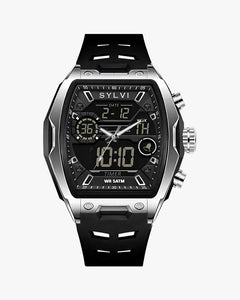
Vanguard Black Silver Silicone
Rs. 1,689.00
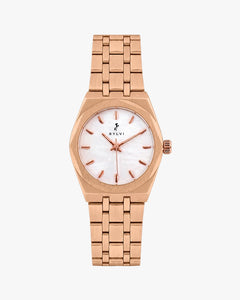
Sia White Rosegold Steel
Rs. 2,329.00
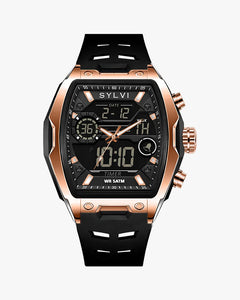
Vanguard Black Rosegold Silicone
Rs. 1,689.00
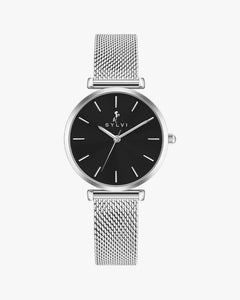
Serene Black Silver Mesh
Rs. 1,699.00

