






Watch Movements & Luxury Watch Parts Complete Overview

Buying a watch used to be simple — you walked into the nearest watch shop, pointed at something shiny, and left. These days, the world of luxury wristwatches has become something else entirely. Whether you are looking at automatic watches for men, browsing rose gold watches for women, or just curious about what sits behind that dial, understanding the parts of a watch genuinely changes how you wear one.
This guide covers everything — watch movements, case materials, crystal types, strap options, and the differences between mechanical and quartz. By the end, you will know exactly what you are paying for when you invest in a high end watch for men or a beautifully crafted ladies wristwatch.
The Movement: What Makes a Watch Tick
Ask any collector what the most important part of a watch is, and they will not say the dial or the case. They will say the movement. A watch movement — sometimes called the calibre — is the engine that drives everything. Every hand that moves, every complication that functions, every second that ticks by comes from this single mechanism sitting quietly behind the dial.
Movements generally fall into two main categories: mechanical and quartz. Within mechanical, you have manually wound and automatic. Each type has its strengths, its culture, and its loyal following. Knowing the difference is more than a factoid, it impacts how you clean your watch, how frequently you must service it and ultimately how you feel about wearing it every day.
Mechanical Watches — Craftsmanship You Can Hear
A mechanical watch runs entirely on stored spring energy. There are no batteries, no electronics, and no circuit boards. Instead, you wind a mainspring by hand — typically by turning the crown on the side of the case. As that spring slowly releases its tension, it drives a series of gears and levers that ultimately move the hands of the watch.
The escapement is the component that controls this release. It engages and disengages the gear train, and this is what you hear as the tick-tick-tick noise when you bring the watch very close to your ear. This tick is not an imperfection, it's centuries of engineering crammed into a tiny box.
Why choose a manually wound mechanical watch?
Many serious collectors prefer manual winding precisely because of the ritual involved. Winding your watch each morning is a small but deliberate act — you are reminded that you own something alive, something that depends on you. Men's wristwatches with manual movements tend to have slimmer profiles because they do not need a rotor, making them ideal under a dress shirt cuff.
The trade-off is real though. Forget to wind it for a day and it stops. The power reserve on most manual watches sits somewhere between 38 and 72 hours, depending on the calibre and the size of the mainspring barrel.
Automatic Watches — Movement Without Effort
An automatic watch is still a mechanical watch at heart. The key difference is one brilliant addition: a rotor. This is a semicircular weight attached to the movement that spins freely as your wrist moves throughout the day. That spinning motion winds the mainspring automatically, meaning if you wear the watch regularly, it never runs out of power.
For most people, an automatic watch is the perfect balance. You get all the craftsmanship and romance of a mechanical movement without the daily discipline of hand winding. Automatic watches for men are the most popular category in the luxury segment for exactly this reason — they reward you for simply living your life.
It is worth knowing that automatic movements do accumulate power even when the watch is not on your wrist, up to the limit of the power reserve. Most quality automatic movements store between 42 and 80 hours. That means a Friday night takeoff of your watch should still show Monday morning without stopping — depending on the calibre.
If you do stop wearing it for a week or more, you will need to manually wind the crown a few times before putting it back on. Most automatic watches allow this and it does not damage the movement — just go gently and stop when you feel resistance.

Quartz — The Practical Powerhouse
Quartz movements work on an entirely different principle. A small battery sends an electrical current through a quartz crystal, which vibrates at exactly 32,768 times per second. These vibrations are counted by a circuit and converted into one pulse per second — which is what moves the hands of a quartz analogue watch in that characteristic step motion.
The result is outstanding accuracy. A quality quartz movement loses only a few seconds per month — far better than even a well-regulated mechanical movement. For someone who needs their men's watch to show the right time without thinking about it, quartz is an entirely sensible choice.
Quartz watches also tend to need far less maintenance. There are no tiny gears to service, no oils to replace on a set schedule. Change the battery every year or two and you are done. Many analogue watches and women watches that look visually identical to their mechanical counterparts run on quartz movements, which allows them to be offered at more accessible price points.
Key Luxury Watch Parts You Should Know
Understanding the parts of a watch helps you evaluate quality and communicate clearly when you visit a watch repair shop or talk to a seller. Here are the components worth knowing — on every watch from an entry-level analogue watch to a high end luxury wristwatch.
The Case = The outer shell that surrounds and protects the movement. Case material is one of the first quality indicators. Quality watches use 316L stainless steel — a marine-grade alloy that is highly resistant to corrosion, sweat, and everyday impact. Case shape also determines the dial size, thickness, and how the watch sits on your wrist.
The Dial = The face of the watch — where hour markers, indices, text, and subdials live. Dial finishing is a major quality differentiator in luxury watches.
The Bezel = The ring surrounding the crystal. Bezels can be fixed or rotating, smooth or engraved, plain steel or set with diamonds. On sports watches, a rotating bezel tracks elapsed time.
The Crown = The small knob on the side of the case. Pulling it out to different positions allows you to wind the mainspring (on mechanical watches), set the date, or set the time. The quality of the crown and its threading directly affects the watch's water resistance reliability.
The Crystal = The transparent cover protecting the dial. Three main types exist — acrylic, mineral glass, and sapphire. Mineral glass is harder but will scratch over time with daily wear. Most luxury watches and quality mid-range pieces use sapphire as standard.
The Caseback = The rear cover of the watch case. A solid steel caseback protects the movement and often carries engraved information — brand name, water resistance rating, serial number, and case material.The Ocean-Y features a stainless steel caseback that adds structural rigidity and sealing quality.
The Jubilee Strap = The Ocean-Y Black Red Silver Steel comes fitted with a Jubilee stainless steel bracelet. The Jubilee design was originally associated with high-end Swiss watchmaking.
The Lugs = The projecting arms at the top and bottom of the case that hold the strap or bracelet. Lug width determines which straps are compatible — always check before buying a replacement leather strap.
The Date Window = A practical complication found on many everyday watches — a small aperture in the dial, usually at the 3 o'clock or 4 o'clock position, that displays the current date through a rotating disc inside the movement.
Sapphire Crystal — The Gold Standard in Watch Crystals
If you have ever scratched the glass on a cheaper watch and been frustrated by how easily it happened, sapphire crystal is the answer. Sapphire rates 9 on the Mohs hardness scale — second only to diamond, which sits at 10. In practical terms, everyday objects like keys, coins, and concrete simply cannot scratch it under normal use.
Synthetic sapphire used in luxury wristwatches is not a natural gemstone — it is aluminium oxide grown in a controlled environment and then sliced and shaped into watch crystals. The result is optically clear, chemically resistant, and extremely hard. Most high end watches for men and luxury women watch brands use sapphire crystal as standard.
The main drawback is brittleness. Drop a watch onto a hard edge at the wrong angle and sapphire can crack or chip, while mineral glass or acrylic might flex or simply scuff. This is why professional sports watches sometimes use mineral glass with anti-reflective coating — the slight sacrifice in scratch resistance gains in impact resistance.
Leather Straps & Bracelet Options
The strap of a watch does more than hold it on your wrist. It sets the tone for the entire piece. A brushed steel bracelet on an automatic watch reads sporty and modern. A dark brown leather strap on the same case reads formal and classic. Swapping a strap is the fastest — and cheapest — way to change the personality of any watch, whether it is a men's wrist watch analog or a ladies wristwatch.
For leather straps, the quality of the leather matters enormously. Full-grain leather — the top layer of the hide — is the most durable and develops the richest patina. Alligator, ostrich, and calfskin are common choices in the luxury segment. When shopping at a watch repair shop or online, always check the lug width (usually measured in millimetres) to make sure the strap will fit.
Sylvi Watches That Bring These Principles to Life
Everything described in the sections above — the movement, the crystal, the case, the strap — comes together in a finished watch. Here are two Sylvi pieces that demonstrate these elements in very different ways.
The Ocean-Y is an excellent example of a watch that does not compromise on materials at its price point. Sapphire crystal on a steel sports watch is not a given at every brand — at Sylvi, it is standard. The red accent ring around the dial is more than a style choice; it frames the hour markers in a way that improves legibility at a glance, which is exactly what a sports-oriented watch should do.
What to Actually Look for When Buying a Watch
Whether you are searching for the best watches for men, browsing vintage watches, or picking out a woman brand watch as a gift, the process can feel overwhelming when you do not know what separates a solid purchase from a compromise. Here are the things that actually matter.
Your pre-purchase checklist
- Movement type: Decide between mechanical and quartz based on how much daily involvement you want with your watch. If you like rituals, go mechanical. If you want to set-and-forget, quartz is entirely valid.
- Crystal material: For anything you plan to wear daily, insist on sapphire crystal. Mineral glass is acceptable but will show micro-scratches over time. Acrylic is best left to vintage or very casual pieces.
- Case size vs wrist size: A 42mm case on a small wrist looks like a serving plate. Measure your wrist and check that the lug-to-lug distance (not just case diameter) fits comfortably. This measurement is rarely advertised but matters enormously.
- Water resistance: 3 ATM means splash resistance only. 5 ATM handles swimming. 10 ATM and above handles snorkelling. Do not dive with anything rated under 20 ATM regardless of what the marketing says.
- Strap compatibility: Check the lug width before you fall in love with a watch, especially if you plan to replace the factory strap with a leather strap or NATO later.
One final thought — the best watch for men or women is the one you actually wear. A watch sitting in a drawer because it is too precious to use has failed at its only job. Buy something that suits your life, learn how it works, and wear it with confidence. That is what watch ownership is really about.
When to visit a watch repair shop
Even the most reliable automatic or quartz watch will eventually need attention. For quartz, a battery change every 12 to 24 months is typical — this is quick and inexpensive at any watch shop near you. For mechanical and automatic watches, a full service every 4 to 6 years is recommended. This involves disassembling the movement, cleaning every component in ultrasonic baths, replacing worn parts, and re-lubricating with fresh oils.
If your mechanical watch has suddenly lost accuracy — gaining or losing significantly more than 15 seconds per day — this is often the first sign the movement oil has aged and begun to affect timekeeping. A service at that point is worth it. Ignore it long enough and small problems become expensive ones.
Recommended Topics
Latest Watches
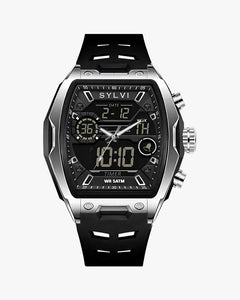
Vanguard Black Silver Silicone
Rs. 1,689.00
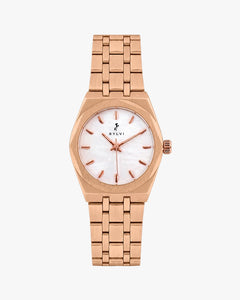
Sia White Rosegold Steel
Rs. 2,329.00
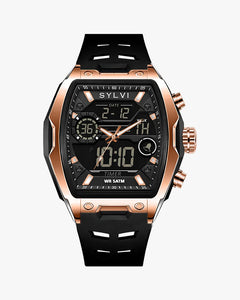
Vanguard Black Rosegold Silicone
Rs. 1,689.00
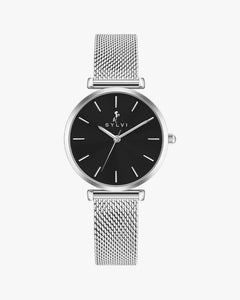
Serene Black Silver Mesh
Rs. 1,699.00

