






Top Watch Poses for Men to Upgrade Your Instagram Feed

Your watch is on. The dial reads clean. The strap fits. Now comes the part most men skip entirely knowing how to actually photograph it.
A good watch photo isn't about luck or expensive gear. It's about wrist angle, light direction, and whether the pose looks like something a real person would do. Get those three things right and the watch does its job. Get them wrong and even a beautiful dial disappears into a mediocre image.
This guide covers the seven poses that work consistently well for men's watches on Instagram, plus the specific technical reasons each one works. Whether you wear a slim analog, a layered chronograph, or a skeleton automatic, the principles apply.
Why the Pose Matters More Than the Watch
A wristwatch sits at the end of every gesture a man makes. Every handshake, every reach, every moment your hands are in frame the watch is there.
On Instagram, that visibility works for you or against you depending entirely on how the photo is framed. A poorly positioned wrist hides the dial, distorts the case shape, and makes even a well-designed watch look like an afterthought. A correctly positioned wrist lets the watch read the way its designers intended — proportions correct, dial legible, strap visible.
Price has nothing to do with it. An analog watch at ₹2,499 with the right pose photographs with more authority than a ₹25,000 watch with a bad angle. The pose is the work.
1. The Wrist Tilt — The Foundation Pose
Rest your wrist naturally on a surface your knee, a table, an armrest and tilt it slightly toward the camera so the dial faces forward. No forced angle. Your hand drops naturally; the watch follows.
Why it works: It mimics exactly how the watch sits when you check the time. The dial is fully visible, the strap lies flat, nothing looks staged. Of all the poses here, this is the one that photographs well even on a first attempt with a phone camera.
Technical note: The key is the slight inward tilt of the wrist — maybe 15 to 20 degrees toward the lens. Too little and the dial catches glare. Too much and the case foreshortens. Get it roughly right and the watch reads clearly from any distance.
Lighting: Natural window light from the side is ideal. Direct flash reflects off mineral crystal glass and washes the dial entirely avoid it.
Hand position: Keep your hand relaxed, fingers loosely curled. A tense, spread hand makes the whole shot look effortful. The watch should look like it belongs on your wrist, not like you're trying to show it off.
2. The Crossed Arms Power and Presence
Stand with your arms crossed, left wrist facing outward so the watch is in the foreground of the frame. This is one of the most naturally confident postures a man can hold, and the watch sits exactly where the eye goes first.
Why it works: The body language tells half the story composed, deliberate, at ease. The watch in the foreground completes it. You're not pointing at the watch or thrusting your wrist at the camera. It's just there, visible, because you happen to wear it.
Works best with: Chronograph watches with layered sub-dials. The multiple registers on a chronograph face create visual depth that reads well at this mid-close distance. A clean single-dial watch can also work here the simplicity reads differently, but just as well.
Pose tip: Don't cross your arms too tightly. A locked, defensive arm cross changes the body language entirely. Let the arms rest loosely against the chest. The watch should fall at mid-chest height in the frame enough context to read the outfit above and below.

3. The Watch Check The Most Functional Pose
Lift your wrist toward eye level as if you're actually checking the time. Head slightly down or turned to the side. The watch sits between your face and the camera.
Why it works: It's the most natural thing a person does with a watch. No man looks unnatural checking the time it's a gesture we perform every day without thinking. That naturalness translates directly into photos. The pose communicates exactly what a watch is for, without any staging required.
Technical note: The camera should be roughly level with the watch, not shooting upward from below the wrist. A low angle from below distorts both the dial and the jawline. Eye-level or slightly above gives the cleanest result.
Works best with: Watches with strong dial depth skeleton automatics especially. As the wrist tilts upward, the dial catches the light differently than it does face-on. A skeleton movement with exposed gears rewards that changing angle in a way a flat printed dial cannot.
4. The Jacket Cuff Pull Formal Edition
One hand grips the cuff of a jacket or shirt sleeve and pulls it back slightly to reveal the watch. Clean, deliberate, editorial.
Why it works: It's a reveal. The watch was hidden; now it isn't. That moment of exposure is exactly how watch photography works in international print every major magazine has used a version of this shot. The gesture implies intention: this man pays attention to things other people miss.
Works best with: Dress watches or any watch with a metal case against a contrasting sleeve. A rose gold case against white or navy creates an immediate focal point. Dark strap against a light-coloured cuff works equally well.
Critical detail: The jacket or shirt must fit well. A loose sleeve kills the elegance entirely. The watch should just emerge from the cuff not the full strap, not the full case, just enough dial to create the shot.
5. The Hand-on-Knee Casual Confidence
Seated, hand resting naturally on your knee or thigh, wrist facing the camera with the watch visible. Relaxed. Unforced.
Why it works: It looks like a real moment a café table, a meeting room, the backseat of a car. The watch is part of the scene rather than the subject of it. That distinction matters on Instagram, where purely product-focused shots perform less well than lifestyle-contextual ones with actual human presence.
Works best with: Leather strap watches. The strap detail is fully visible from this angle texture, stitching, the way the leather sits against the wrist. It rewards watches with quality strap materials.
Pose tip: Lean slightly forward as you take the shot. It naturally brings the wrist closer to the lens without making the lean visible in the frame. The watch gets proximity without the pose getting larger.
6. The Flat Lay Clean and Controlled
The watch is placed on a flat surface a wooden table, a leather journal, a sheet of textured stone and photographed from directly above.
Why it works: It's the highest-control composition in watch photography. Every element in the frame is deliberate. The watch itself gets the clearest possible read: dial proportions, case shape, strap texture, every design detail without distraction.
Flat lay photos consistently outperform worn shots for saves and discovery on Instagram, particularly for watches with strong dial design. They're also the easiest to execute well with a phone — no photographer needed, no pose to hold.
Technical note: Place the watch at a slight diagonal 30 to 45 degrees off vertical. A perfectly straight watch reads as robotic rather than curated. Add one prop maximum. A pen, a folded jacket corner, a plain notebook. Two props and the composition starts to compete with the watch. Three and the watch disappears.
Works best with: Minimalist dials with clean geometry. The simpler the watch face, the more the composition does. Busy dials can work here too, but they need negative space around them to breathe.
7. The Walking Shot Motion and Presence
Captured mid-stride, the watch is visible as the arm swings naturally. Background slightly blurred. The frame has movement in it.
Why it works: Motion blur on the background throws the watch the sharpest element in the shot into sharp relief. The contrast between the in-focus watch and the blurred surroundings creates depth that static shots can't produce.
This is the most difficult pose to execute without another person handling the camera, but it produces the most editorial result. If you can get someone to photograph you mid-walk, this is the shot that most resembles professional watch photography.
Key instruction: Walk naturally and don't look at the camera. The watch is the subject of the photo; you are the environment it exists in. A street background — pavement, building facades, steps grounds the image in real life better than any studio could.
Works best with: Watches with high visual contrast between the dial and case. A dark dial in a light case, or vice versa, catches the light as the arm moves and creates different reads at different points in the stride.

The Technical Basics That Fix Every Watch Photo
Pose accounts for half the work. The other half:
Light direction. Side lighting from a window creates shadow depth on the dial and case that makes a watch look three-dimensional. Overhead or direct-flash lighting flattens everything. If you can't control the light, position yourself so a window is to your left or right, not behind the camera.
Background neutrality. The background should not compete with the dial. Beige, grey, white, and dark wood all let the watch read clearly. If the watch has a dark dial, shoot against light. If it has a light dial, the reverse. A patterned or colourful background pulls the eye away from what you're trying to show.
Correct case size on the wrist. No pose compensates for a watch that's proportionally wrong for the wrist wearing it. An oversized case looks uncomfortable; an undersized one looks like a costume. When the case, lug length, and strap width match the wrist correctly, every pose works better by default. This is the single most important variable in watch photography that has nothing to do with technique.
Which Watch Type Photographs Best for Each Pose?
|
Pose |
Best dial type |
Why |
|
Wrist Tilt |
Clean analog |
Reads clearly face-on |
|
Crossed Arms |
Chronograph |
Sub-dial depth rewards mid-distance |
|
Watch Check |
Skeleton automatic |
Tilting wrist shows movement |
|
Cuff Pull |
Dress watch / gold case |
Contrast against sleeve |
|
Hand-on-Knee |
Leather strap |
Strap detail visible |
|
Flat Lay |
Minimalist |
Composition carries the shot |
|
Walking Shot |
High-contrast dial |
Catches different light mid-stride |
FAQ
What is the best watch pose for Instagram for men?
The wrist tilt and the watch check are the most reliable for consistent results — both look natural, keep the dial clearly visible, and work without a second photographer. For styled or editorial content, the cuff pull and flat lay perform best in terms of saves and product discovery.
What phone settings work best for watch photography?
Portrait mode adds background blur that helps isolate the watch on worn shots. For flat lays, turn portrait mode off and shoot in standard photo mode — you want the full watch in sharp focus, not just the dial. Clean the lens before shooting; a smudged lens softens detail more than any lighting error.
Does a more expensive watch look better in photos?
Not automatically. A well-posed watch at any price point outperforms a poorly posed expensive one. What matters is dial clarity, case proportions relative to the wrist, and strap quality. Those factors are visible at ₹2,000 and at ₹2,00,000.
What background works best?
Neutral backgrounds — matte beige, grey, white, dark wood — let the watch read without distraction. The simpler the better. The background's job is to not exist.
Can I do this without a DSLR?
Yes. Modern smartphone cameras produce watch photos that perform well on Instagram. Good natural light eliminates almost every equipment limitation. The pose and the light do 80 percent of the work.
Why do my watch photos look flat even with good lighting?
Usually one of three things: the watch is face-on with no dial angle, the background is too busy, or the wrist position is tense. Check all three before adjusting the light. A relaxed wrist at a slight angle in front of a neutral background fixes most flat watch photos.
Recommended Topics
Latest Watches
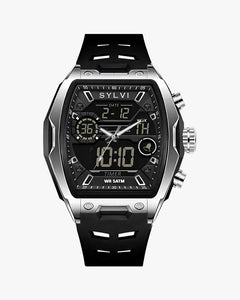
Vanguard Black Silver Silicone
Rs. 1,689.00
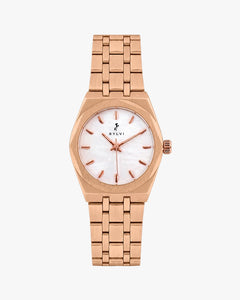
Sia White Rosegold Steel
Rs. 2,329.00
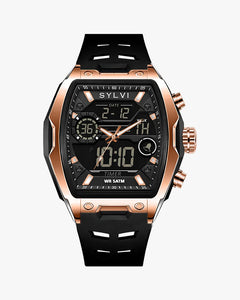
Vanguard Black Rosegold Silicone
Rs. 1,689.00
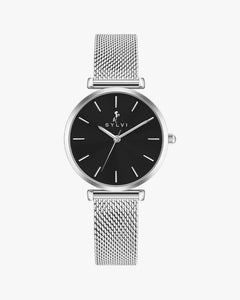
Serene Black Silver Mesh
Rs. 1,699.00


Leave a comment