






How to Store Watches Properly When Not in Use

A wristwatch is more than something that tells you the time. It is a component of your own style, a helpful accessory on a day-to-day basis, and on some occasions a particular gift with recollections. Whether you are an owner of an old analog style watch, a chronograph, or an automatic watch, watch storage tips can help keep these timepieces looking and working well when they're not in use.
A great number of people make their way to pick up their watch with care but fail to think about its storage. They might leave the watch on a bedside table, put it inside a drawer with other items, or take the watch out of sight for months without checking on it.
These habits can cause dust, moisture, scratches, extreme temperatures, and accidental damage to a watch.
Fortunately, watch storage isn't complicated, costly, or a chore. With a few simple precautions, a clean storage area, and a soft cloth, it can make a difference.
In this guide, we will discuss how to store the watch properly, what kinds of storage devices you can store your watch in, and how to take care of various types of watches.
Why Is Proper Watch Storage Important?
A watch has several parts that are all necessary to show the correct time. While not wearing it, the case, movement, dial, glass and strap of a watch can be influenced by the environment in which it is kept.
These components will stay in better condition with proper storage and your watch will be ready for the next time.
1. Protects the Watch From Scratches
Scratches can be caused by keys, jewellery, coins or other hard objects touching the watch case or the glass surface or the metal bracelet.
A separate soft-lined compartment for the watch minimises the need for unnecessary contact with these items.
2. Reduces Exposure to Dust
Dust may get stuck around the watch case, bracelet links and strap attachments.
A closed watch should be able to withstand normal environmental exposure, but when it is kept in a box covered with the lid, the watch is more easily cleaned and looks better.
3. Helps Prevent Moisture Damage
Some watch materials may be impacted by too much humidity, particularly leather straps. Watch corrosion can also occur if there are damaged parts or broken seals in the watch that allow moisture to seep in.
A dry place to store your wristwatch long-term is paramount.
4. Preserves the Watch's Appearance
Some straps and other materials may be affected by the color and condition caused by direct sunlight, high temperatures, and inappropriate storage.
A good watch box will enable your favorite watch to look good for years.
1. Clean Your Watch Before Storing It
Cleaning the watch before storage is the first step to learning how to store watches.
Throughout the day, watches are exposed to sweat, dust, skin oils and environmental particles. If these materials are left on the watch for long periods it can impact the watch's finish and strap.
How to Clean Your Watch Before Storage
Gently use a clean soft microfibre cloth to wipe the case and glass first.
Be careful about the rear of the watch, since this may come into contact with skin and trap sweat.
If the bracelet is made of metal - rub gently between the accessible links to remove surface dirt.
Use a dry cloth to wipe off sweat and moisture from the watch leather strap, if it has one. Don't put the leather in water.
If the strap is silicone, follow the manufacturer's cleaning directions and ensure the strap is completely dry prior to storage.
Do not use strong cleaning chemicals, household solvents, or abrasive materials on your watch.
Watch care tip: If you wear your watch on a hot day, let it dry out in an open area before storing it in a closed storage box.

2. Choose a Suitable Watch Storage Box
The easiest way to protect your watch is to store it in a special watch storage box.
The best watch box provides a dedicated place for your wrists and makes it easy to avoid damaging your watches.
It can also help you keep your collection tidy, particularly if you have several watches for different occasions for work, for a casual dinner out, or for special events.
What to Look for in a Watch Storage Box
Soft interior lining: Select a box that is lined with soft material or padded compartments. These materials can be used to protect cases and bracelets from unnecessary hard contact.
Individual compartments: Separate sections eliminate the rubbing of multiple watches.
Suitable cushioning: Watch pillows can be used to hold bracelets and keep things tidy. Ensure that the pillow is not too large and does not apply pressure on the clasp.
Secure closure: A tightly fitting lid will minimize dust exposure and accidental movement.
Convenient size: Make sure the box is the right size and that the watches will fit without cramming.
Don't necessarily need a costly storage box. The original box that came with your watch can also be a good choice if it is dry, clean, and offers appropriate protection.

3. Keep Watches Away From Direct Sunlight
Sunlight, while not harmful, may cause some effects on some watch materials.
If the watch is placed in a sunny window or in a parked car, it will get warm. Some leather and synthetic straps will also start to fade or deteriorate after prolonged exposure.
Avoid these issues by storing in a shaded area.
A bed drawer, cupboard shelf, or a closed watch box is a good option if you can.
It is also a good idea to steer clear of any surfaces that get too hot throughout the day, such as watches.
You should also avoid leaving watches on surfaces that become unusually hot during the day.
The answer is simple: keep it in a place where you'll be happy with your watch beside other personal items you'd want stored that way.

4. Protect Your Watches From Humidity and Water
Wetness is another factor to take into account when storing watches.
An even waterproof watch shouldn't be stored in wet condition.
Water resistance refers to the ability of a watch to endure specified exposure. It is not to say the watch and/or the watch strap are 100% unaffected by moisture.
The leather strap will absorb water even if worn on a water-resistant watch, for instance.
How to Prevent Moisture Problems
-
Don't keep watches in bathrooms or by sinks.
-
Before storing the watch and strap, dry them off.
-
Monitor storage areas periodically for moisture.
-
Check storage compartments occasionally for moisture.
-
Don't keep watches in a damp bag or container.
A dry cupboard inside is better than a damp place to store if it is a humid time of the year, like during the Indian monsoon.
A good moisture control product can be used when necessary near the storage box. Ensure that it does not leak, burst, or come into contact with the watch.
If condensation appears within the watch glass, don't try to open the case; rather, call a qualified watch service professional.

5. How to Store Automatic Watches Properly
Unlike regular battery-powered quartz watches, automatic watches can be powered by solar energy.
An automatic mechanical movement is powered by a mainspring that holds energy. When the wearer's wrist is moved, a rotor mechanism winds the spring.
Automatic watches don't usually stop when they are not worn if the power in the watch is used up.
From then on, the watch ceases to run.
It is normal and not necessarily an indication of the watch's problem.
Can You Store an Automatic Watch Without Wearing It?
Yes. Most automatic watches can be safely stored when stopped.
Actually, it's generally enough to keep an automatic watch in the clean, dry, padded automatic watch case for day-to-day use.
Once it is ready for re-use, wind it up and set the time according to the manufacturer's guidelines.
Some automatic watches require hand winding and others have varying operating requirements.
Do not force the crown or attempt to use movements that are not recommended for the type of movement you have.
Do You Need a Watch Winder?
A watch winder is an automatic watch rotator that allows the automatic watch movement to be turned over to keep the watch running.
It might be handy if you're someone who wears multiple automatic watches frequently, particularly if you have a watch with complicated calendar features.
But for every automatic watch owner a watch winder is not a must.
For those who wear automatic watches from time to time, a sensible option is to safely store the watch and reset it up when required.
Before operating a winder, make sure that the rotation adjustment is suitable for your watch movement.
6. How to Store Quartz Watches for a Long Time
The popularity of quartz watches lies in their ability to provide convenient, accurate timekeeping that requires relatively little attention each day.
The majority of quartz watches have a battery powering their movement.
The battery status of a quartz watch should be taken into consideration when storing one.
Should You Remove the Battery?
In most cases, the removal of batteries is not required for short durations, like a few days or weeks.
Not all cases are the same, though. It will decrease battery usage if there is no motion.
Pulling out the crown also may bring other hazards if it makes it difficult to establish the intended seal.
To be safe, follow manufacturer's instructions for handling the crown of your specific watch, and leave it in its standard secure position unless the manufacturer recommends otherwise.
Should You Pull Out the Crown to Stop the Watch?
A few people remove the quartz watch's crown to conserve battery life.
Not all cases are the same, though. It will decrease battery usage if there is no motion.
Pulling out the crown also may bring other hazards if it makes it difficult to establish the intended seal.
To be safe, follow manufacturer's instructions for handling the crown of your specific watch, and leave it in its standard secure position unless the manufacturer recommends otherwise.
7. Store Watches According to Their Strap Material
The various watch straps need to be cared for somewhat differently.
Knowing these differences can be beneficial when it comes to maintaining the watch and its overall look.
Leather Strap Watches
Leather straps watches usually look classic and elegant and can be preferred for formal and dressy watches.
But leather may be vulnerable to too much moisture, too much sun and too much heat.
To safely store a leather watch, wipe away any sweat with a soft dry cloth.
If the strap is moist, let it air-dry.
Do not bend the strap too tightly or around an inappropriate cushion.
Keep leather watches in a cool, dry, airy place.
In the case of classic designs, view Sylvi's watches for men to find the various styles that would be appropriate for daily or special occasions.
Stainless Steel Strap Watches
Stainless steel Strap watches bracelets are a popular choice due to their durability and appearance.
But even steel watches may get some scratches if they are not properly stored.
Store each watch in an individual padded compartment and make sure that metal bracelets do not rub against other watch cases.
Ensure the bracelet is dry, especially around links and bracelet clasp.
Silicone Strap Watches
Silicone straps watches come in handy for easy and casual wear, and also for fashionable watch styles.
They're relatively easy to clean and dry, and then store.
Don't sit in direct sunlight, in any extreme heat or in contact with incompatible chemicals.
Keep the strap out of sharp corners and places of excessive pressure.
Mesh Strap Watches
A mesh bracelet offers a unique and elegant look.
They are woven with metal, which can catch tiny particles in the spaces between.
Clean the bracelet before storing it, and ensure it is not stored in contact with objects that could scratch the finish.
8. Avoid Storing Watches Near Strong Magnets
Some watches can be affected by magnetism and so cannot be relied upon for correct time-keeping.
Movements of mechanical watches can be magnetized, which can cause problems with the accuracy.
However, analog quartz watches can be affected by magnetic fields as well, due to the presence of small motors.
To ensure safe storage, do not store watches close to strong magnets, magnetic clasps, speakers and other items with strong magnetic components.
It is not necessary to completely banish all electronic devices from your home. The key thing to remember is to avoid contact with and exposure to magnetic sources for extended periods of time.
If you notice that your watch starts gaining or losing time more than usual after being exposed to magnets, visit your watch repair shop for a check-up.
9. How to Organise Multiple Watches at Home
Organisation can make it easier to manage your collection if you have more than one watch.
Maybe you own a simple analogue watch for work meetings, a chronograph for weekends and a smart watch for the special occasions.
Rather than putting them in a drawer, make a special watch storage area.
Organise Watches by Usage
Your collection can be sorted into daily, formal and special occasion watches.
This makes it simpler to select a proper design without having to repeatedly deal with each watch.
For instance, a person who loves to gather watches for men may have an office style section and a casual style section.
Likewise, a set of watches for women may be sorted by strap material, dial colour, or event.
Give Every Watch Its Own Space
Do not stack watches or let their cases come in contact.
The space for each watch should be sufficient so it does not squeeze and cause pain to the watch.
If you have various sized cases, select compartments that fit them nicely.
Keep Accessories Separate
Any extra straps, adjustment tools and bracelet links must be kept in their own compartments.
This minimises the likelihood of contact between the watch glass and metal tools and spare parts.
It also saves time in case you want to swap out straps or put together a watch for an event, as everything is organised.
10. Common Watch Storage Mistakes to Avoid
Over time the condition of your watches can be impacted by the way you store them, even if it is a small way.
Here are some common pitfalls to steer clear of.
Leaving Watches Loose in Drawers
An unprotected watch can easily get scratched when it is placed next to keys, coins, pens, and jewellery.
Instead use a padded compartment or protective pouch.
Storing a Watch While It Is Wet
A closed box can be used to hold moisture, which may cause some straps and materials to become affected.
Be sure to dry the watch before storing it.
Keeping Watches Near Extreme Heat
Never leave watches in a car, by heaters, or on surfaces that are in the direct path of sunlight for long periods.
Batteries, lubricants and other watch materials can be influenced by high temperatures.
Ignoring a Depleted Battery
If a quartz watch is stopped, it might require a battery check.
Batteries that are exhausted and left for a long time may be more likely to leak.
Using Incorrect Cleaning Products
A watch finish or strap can be damaged by using too harsh of chemicals, abrasive cloths or improper cleaning sprays.
Handle with care take care of the material of your watch.
Forgetting to Check Stored Watches
A clock that has been stored for a number of months should be inspected before being used again.
Check the strap, crown, case and overall condition.
These are some easy things to do especially if you have a growing watch collection.
11. How to Store Watches While Travelling
Proper watch Storage is also crucial when traveling.
People often have extras to complement each outfit or occasion.
But, if a wristwatch is put inside a suitcase without proper protection, it might be damaged by pressure or scratches.
Use a Protective Watch Travel Case
A compact roll or padded travel case will work.
Select a case that fits the watch snugly and will not shift while you're transporting the watch.
Avoid Contact With Hard Objects
Never place an unprotected watch near chargers, keys, metal components, or objects that can scratch the watch.
When wearing more than one watch, wear them in separate compartments if possible.
Protect Watches From Pressure
When packing heavy luggage items, it is important to take care not to damage the watch glass, case or bracelets.
Keep travel case out of compression.
Keep Your Watch Dry
If your suitcase gets wet or if your watch gets wet, inspect it to make sure the case and strap are dry before putting them away.
Just a bit of preparation can ensure you're able to make your way with your favorite timepieces without fear.
12. Long-Term Watch Storage Checklist
Looking to keep a watch for longer periods of time?
Before you store it, check off the following items:
|
Storage Step |
What You Should Do |
|
Clean the watch |
Gently remove dust, sweat, and fingerprints |
|
Dry the strap |
Make sure no moisture remains |
|
Choose a safe location |
Use a clean, dry, shaded storage area |
|
Protect the case |
Place the watch in a soft-lined box |
|
Separate accessories |
Keep keys and metal objects away |
|
Check the battery |
Follow model-specific guidance for quartz watches |
|
Secure the crown |
Leave it in the manufacturer's recommended position |
|
Avoid magnetic sources |
Keep away from strong magnets |
|
Inspect occasionally |
Look for moisture, strap wear, or battery issues |
Occasional-use watches can usually be maintained in good condition with a simple storage procedure.
13. How Often Should You Check Stored Watches?
It is logical to check a watch from time to time even if not intended for everyday use.
If it's been stored for some time, look for moisture, strap wear, abnormal colour changes and trouble with batteries.
For those who have a quartz watch, be sure to check the battery isn't low and it's not misplaced.
With an automatic watch, don't worry that the hands have stopped just because. This is what is supposed to happen after the movement has been depleted.
If an automatic watch must be returned for use, wind and set as per the instructions of the watch.
If you notice anything abnormal, please get professional advice before taking steps to repair.
The original instructions, purchase information, and service records of the watch are also valuable to have.
14. Choosing Watches That Suit Your Lifestyle
The first key to good watch care is to invest in a watch that is suitable for your daily life.
Those who attend business meetings regularly might want an elegant analog watch with a leather or stainless steel strap.
For those who like casual wear, a silicone-strap watch can be an ideal option for everyday wear.
Automatic movements, chronographs, and unique dial designs are features that can be welcomed by the watch enthusiast.
Regardless of which you choose, the overall principles of proper watch storage are always the same: Store your watch in a clean, dry, protected environment free of adverse conditions.
You'll find a range of wristwatch styles and styles available at Sylvi for various events and fashion.
If you select the right kind of watch that you like to wear and maintain, it can be a part of your personal collection.
Frequently Asked Questions About Watch Storage
1. What is the best way to store watches at home?
Clean, dry, soft-lined storage box, with separate compartments, is the best. Select a place that is out of direct sunlight, excessive moisture, and close to strong magnets.
2. Can I store my watch in its original box?
Yes. If the original watch box offers cushioning and is stored in a dry and clean place, it can be an adequate storage solution.
3. Is it okay to leave an automatic watch stopped?
Yes. Most watches that are automatic can be safely stopped once their battery is depleted. The watch is windable and resettable before rewearing as per manufacturer's instructions.
4. Should I remove the battery before storing a quartz watch?
Most of the time, it's not necessary to remove batteries for short-term storage. If storing for extended periods of time, check with the manufacturer directions or a professional technician. Spoiled batteries need to be treated immediately.
5. Can humidity damage a wristwatch?
When leather straps get too damp, they can cause issues with weak metal, or even damaged watch seals. Keep watches in a dry, well-ventilated place.
6. Can I keep multiple watches in one box?
Yes. Ideally, a multi-watch storage box is great as long as each watch has its own padded space and does not touch the other watches.
7. How should I store leather strap watches?
Wipe the leather strap with a soft, dry cloth, allow any moisture to evaporate naturally, and store the watch away from prolonged sunlight and excessive humidity.
8. Do watches need to be serviced if they are not worn?
Just putting things away does not mean they are not made of parts. The service needs are dependent on the watch movement, age, condition, and the manufacturer's recommendations. Refer to the appropriate instructions for your model.
Conclusion: Store Your Watches With Care
One of the most simple ways to keep your favorite watches safe is to know how to store them properly when they're not wearing them.
No need for complex arrangements and expensive accessories. Many common problems can be prevented with the use of a protective watch box, a clean microfibre cloth, and a proper storage location.
Clean the watch before putting it away, keep moisture at bay, watch out for temperature extremes and pay special attention to leather watch straps and battery-powered watches.
For those who wear one wristwatch every day or have multiple collections of them, smart storage is essential to maintain their aesthetic and ensure they are available when needed.
Come to Sylvi Watches and discover the new fashion and choose a watch for your daily attire.
Recommended Topics
Latest Watches
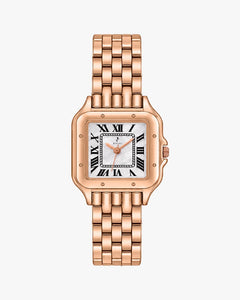
Aria White Rosegold Steel
Rs. 2,329.00

Vanguard Black White Silicone
Rs. 1,689.00
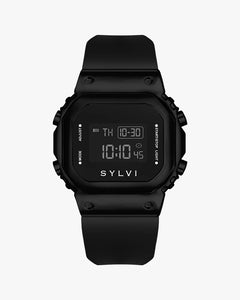
Bolt Black
Rs. 1,399.00
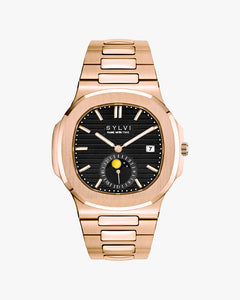
Urbane Moon Rosegold
Rs. 2,169.00

