






Are Automatic Watches Worth It? An Honest Answer for Indian Buyers

Are Automatic Watches Worth It? An Honest Answer for Indian Buyers
Let's get this out of the way first.
Yes, automatic watches are worth it — for some buyers. For others, they're a beautiful waste of money. The answer depends almost entirely on what you want from a watch and how you plan to wear it.
This guide won't tell you automatic watches are magical or that quartz is "just for beginners." Both are engineering achievements. Both have real trade-offs. What this guide will do is give you the information you need to make the right call for your wrist, your lifestyle, and your budget.
Sylvi makes both. We have no reason to lie to you about either.
What Is an Automatic Watch, Actually?
An automatic watch runs on mechanical energy — no battery, no charging cable, no USB port. A weighted rotor inside the movement spins as you move your wrist throughout the day. That spinning rotor winds the mainspring, which stores mechanical energy and releases it through a series of gears to move the hands.
It sounds complicated. It is, a little. That's part of the appeal.
The key difference from a manual mechanical watch: you don't need to wind it yourself. As long as you wear it regularly, the motion of your wrist keeps it wound. Most automatic watches have a power reserve of 38 to 72 hours — meaning if you leave it on the table for the weekend, it'll stop.
That's not a defect. That's just how the physics works.
The core specs of any automatic watch to Automatic Watches:
-
Power reserve (how long it runs without wearing)
-
Beats per hour (the "tick" speed — higher = smoother sweep)
-
Number of jewels (reduces friction in the movement)
-
Accuracy (how much it gains or loses per day)
Automatic vs Quartz — The Real Difference Indian Buyers Should Know
Here's where most watch guides get dishonest. They either romanticise automatics to justify a higher price tag or dismiss them as impractical to make quartz sound smarter. The truth is less dramatic.
Accuracy
A quality Japanese quartz movement like the ones used across Sylvi's range is accurate to ±15 seconds per month. An automatic watch, even a well-made one, typically runs ±10 to ±30 seconds per day. Over a month, your automatic could be 5 to 15 minutes off.
If you need precision — for meetings, travel, anything time-critical — quartz wins. Not even close.
Maintenance
A quartz watch needs a battery change every 2 to 5 years. That's it. An automatic watch needs a full service every 3 to 5 years — cleaning, oiling, regulation. In India, a credible watch service for an automatic costs ₹3,000 to ₹8,000 depending on the movement and the workshop. Factor that into your budget.
Durability for Indian Conditions
India is not Switzerland. We have monsoons, dust, temperature swings between an air-conditioned office and a 40°C afternoon commute. Automatic movements have more moving parts — more parts means more things that can be affected by heat, humidity, and shock.
Quartz movements are sealed, simpler, and more forgiving of everyday Indian life.
The feel on the wrist
This is where automatics genuinely win. The second hand doesn't tick — it sweeps. Smoothly. Continuously. It's quiet. And when you look at a skeleton automatic and watch the gears move through the dial, there's something about it that no battery-powered watch can replicate. It's the difference between watching a mechanical clock and watching a phone screen display the time.
That experience is real. Whether it's worth the trade-offs is personal.
What Do You Actually Get When You Buy an Automatic Watch?
An honest list — not a sales pitch.
You get:
-
A mechanical movement that runs without a battery
-
A sweeping second hand (not the tick-tick of quartz)
-
A deeper connection to the history and craft of watchmaking
-
A conversation piece — especially skeleton and open-heart designs
-
A watch that, with proper care, can last decades
-
The satisfaction of wearing something with hundreds of moving parts on your wrist
You don't get:
-
Accuracy as precise as quartz
-
Maintenance-free ownership
-
The convenience of checking the exact time and trusting it completely
-
A lighter wallet (automatics cost more to make and more to service)
Nobody should feel embarrassed for choosing quartz. And nobody should feel like they're "settling" if they choose automatic. They're just different tools for different reasons.
When Is an Automatic Watch Actually Worth It for Indian Buyers?
Here's the honest framework. Buy an automatic if:
You wear it every day. An automatic that stays in the drawer is a waste. The whole mechanism depends on regular wrist time. If you rotate between multiple watches or only wear a watch occasionally, quartz makes more practical sense.
You're buying it as a long-term piece. Automatic watches are built for decades, not years. If you're thinking of this as something to wear, care for, and eventually pass on — an automatic earns that story in a way a battery watch can't.
You genuinely appreciate mechanical engineering. There are people who look at a sweeping second hand and feel something. If that's you, the premium makes sense. If you're buying it to impress people who won't notice the difference — that's a harder case to make.
You have a budget for servicing. This is non-negotiable. If you can't commit to a professional service every 3 to 5 years, an automatic watch will degrade. The movement needs lubrication. Neglect it and you'll eventually own an expensive paperweight.
Consider quartz if:
-
You need precise timekeeping
-
You live an active outdoor lifestyle (construction, sports, fieldwork)
-
You want zero maintenance
-
You're buying your first serious watch and want to understand what you like before committing more
Automatic Watches in India — What the Market Actually Looks Like
Automatic watches in India broadly fall into three tiers.
Entry-level (₹3,000 to ₹8,000): Mostly imported automatic movements. These look like automatics and function like automatics, but the accuracy and finishing are inconsistent. They're not bad watches. They're an introduction to the category.
Mid-range (₹8,000 to ₹25,000): This is where Indian D2C watch brands including Sylvi operate. At this tier, you get reliable Japanese-sourced or quality domestic movements, better case finishing, and a brand that backs the product with a warranty and actual customer support. The Sylvi Core X and Pulse Skeleton sit in this range — co-developed through the Prototype Program with real customer input before launch.
Premium and luxury (₹25,000 and above): Swiss-made movements, heritage brands, collector-grade pieces. This tier exists and it's valid — but it's a different category entirely.
For most Indian buyers asking "should I buy an automatic watch?", the honest answer lives in that mid-range tier. It's where you get genuine mechanical craftsmanship without paying for the Swiss luxury tax.

The Sylvi Perspective — Why We Make Both
Sylvi was founded in Surat in 2015. We've made quartz watches for most of that time, and we're proud of them. Japanese quartz movement, mineral crystal glass, 1-year warranty — those aren't marketing lines, they're what's inside every watch.
We added automatic movements to our range because enough of our community asked for them. Through the Prototype Program — where real customers test designs before launch — we learned that a segment of our buyers wasn't just looking for a watch. They wanted to understand watchmaking. They wanted to feel the movement on their wrist.
So we built for that. Not because automatic watches are "better." Because they're right for a specific buyer.
The Sylvi Core X runs a genuine automatic movement with a rotor visible through the case back. The Pulse Skeleton goes further — the dial itself is open, so the entire movement is on display. These aren't watches that hide what they are.
If you want to see the engine, these are for you.
If you want a watch that keeps perfect time, never needs a service, and handles the Mumbai monsoon without complaint — our quartz range is the smarter call.
We're telling you this because you should buy the right watch, not the more expensive one.
Automatic Watches as Gifts — A Practical Note
Automatic watches are one of the most considered gifts you can give. They work well as:
-
Gifts for men who already own a quartz watch and want to explore further
-
A graduation or first-job present where something substantial is appropriate
-
A birthday gift for someone who talks about watches more than they own them
-
A Father's Day or anniversary gift when you want something that lasts
What to keep in mind when gifting: automatics need to be worn to stay running. If the person you're gifting has a sedentary job or doesn't wear watches daily, a skeleton quartz might give them the visual drama of an automatic without the maintenance commitment.
The Sylvi Collector's Case — included with every Sylvi watch — makes the unboxing experience genuinely gift worthy. That matters when you're giving something meaningful.
FAQ
Do automatic watches need winding?
Most modern automatics wind themselves through wrist movement. Some have a manual winding option via the crown for when you first set them. If you haven't worn it for more than 48 hours, you may need to give it 20 to 30 hand winds before putting it on.
How accurate is an automatic watch?
A typical quality automatic is accurate to ±10 to ±30 seconds per day. That's 5 to 15 minutes per month. Set it weekly if precision matters to you. A quartz watch loses or gains roughly ±15 seconds per month.
Can I wear an automatic watch while exercising?
Mild exercise — walking, office work, daily movement — is actually good for an automatic since it keeps it wound. Heavy impact sports like boxing, cricket, or weightlifting can damage the movement over time. Check the shock resistance specs of the specific model.
What happens if I don't wear my automatic watch?
It stops. Once the power reserve runs out (usually 38 to 72 hours depending on the movement), the watch halts. Reset the time and restart it by wearing it or winding it manually. No harm done — this is normal.
Are automatic watches waterproof?
"Waterproof" is not a term used in watchmaking. Watches are rated for water resistance in ATM (atmospheres). Most dress automatics are rated 3ATM — rain-safe and splash-resistant, but not for swimming or submersion. Check the specific model's rating before taking it near water.
How often does an automatic watch need servicing?
Every 3 to 5 years is the standard recommendation. A full service includes disassembly, cleaning, lubrication, and regulation. In India, factor ₹3,000 to ₹8,000 for this at a credible watchmaker.
Is an automatic watch better than quartz?
Better for whom? Automatic watches offer mechanical craftsmanship, a sweeping second hand, and a connection to watchmaking tradition. Quartz watches offer better accuracy, lower maintenance, and greater durability in tough conditions. Neither is universally better.
What automatic watch should I buy in India under ₹10,000?
Look for: a genuine automatic movement (not a fake), a case back that shows the rotor (proof of the mechanism), a brand that backs it with a warranty, and a design you'll actually wear. The Sylvi Core X and Pulse Skeleton are worth a look in this range.
The Bottom Line
Automatic watches are worth it for the buyer who will wear them daily, care for them properly, and genuinely values the mechanical experience.
They're not worth it for someone buying an automatic to appear more sophisticated, or for someone who needs their watch to keep perfect time and never thinks about it again.
The honest answer is that quartz is the practical choice for most Indian buyers. Automatic is the passionate choice for a specific kind of buyer. Know which one you are before you spend the money.
If you're still unsure, start with quartz. Understand what you want from a watch. Then, when you know, move to automatic with intention.
Sylvi makes watches for both. We've been doing this since 2015 in Surat, and we'll be honest with you either way.
Race with Time.
Recommended Topics
Latest Watches
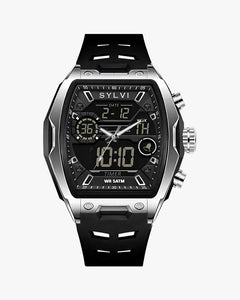
Vanguard Black Silver Silicone
Rs. 1,689.00
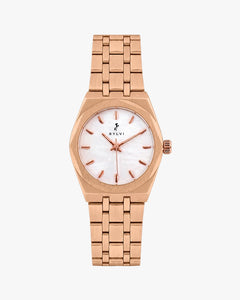
Sia White Rosegold Steel
Rs. 2,329.00
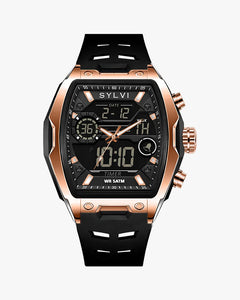
Vanguard Black Rosegold Silicone
Rs. 1,689.00
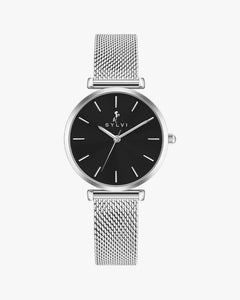
Serene Black Silver Mesh
Rs. 1,699.00

