






What Are Jewels in a Watch? 21, 27 and 33 Jewels Explained

If you've flipped over a watch and seen "21 Jewels," "27 Jewels," or "33 Jewels" stamped near the case-back, you've probably wondered whether a bigger number means a better watch. Here's the direct answer: jewel count tells you how many friction points inside that specific movement are fitted with synthetic ruby bearings — it doesn't follow a single universal chart where every watch with the same number is protecting the exact same parts.
Jewel placement depends on the individual calibre and manufacturer, so a 27-jewel movement from one maker and a 27-jewel movement from another can differ in what they actually cover.
Sylvi has been building Automatic watches in India since 2015, and this guide explains what jewel counts genuinely tell you, so you can read the number correctly instead of assuming it's a fixed formula.
1. What a "Jewel" Actually Is Inside a Watch
The jewels inside a mechanical or automatic watch aren't gemstones for decoration — they're small synthetic rubies (occasionally sapphires) set into the movement as low-friction bearings. An automatic watch relies on dozens of tiny moving parts — the gear train, the escapement, the balance wheel, and the self-winding rotor — all of which would grind against bare metal and wear down quickly without something smoother between them.
A synthetic ruby bearing is harder than steel, needs far less lubrication, and holds its precision for longer, which is why jeweling has been standard in mechanical and automatic movements for well over a century.
This concept applies almost entirely to mechanical and automatic watches. A quartz watch's stepper motor has very few comparable friction points, so quartz movements typically carry only a handful of jewels, sometimes none at all — that isn't a flaw; it's simply a different mechanism doing a different job.
For anyone comparing an automatic watch in India, jewel count is one of the few movement specs that's actually printed and checkable, which is exactly why it's worth understanding properly rather than taking at face value.
2. Why 21, 24 and 25 Jewels Are the Numbers You'll See Most
Across mainstream automatic movements, 21, 24 and 25 jewels are the counts you'll come across most often. Recognized automatic calibers from established movement makers commonly sit in this range, generally covering the escapement, balance wheel, gear train, mainspring barrel, and the rotor's bearing — the friction points that exist in almost any self-winding movement regardless of brand.
This doesn't mean 21 is always "entry-level" and 25 is always "better." The difference between them usually comes down to how a specific caliber's designer chose to jewel the keyless works (the crown and stem mechanism) or the rotor's reduction gears, not a fixed rule that applies across every manufacturer.
Two movements sitting at 21 and 25 jewels can both be complete, well-functioning automatic movements — the gap is in design choice and added coverage at a couple of secondary points, not a missing feature.

3. Where 27 and 33 Jewels Come From — and Why They Aren't Standardised
Jewel counts like 27 and 33 show up less predictably, and it's important to be upfront about that: there's no single industry standard dictating what a 27-jewel or 33-jewel movement must include. These higher counts tend to appear in a few situations —
| Jewel Count Range | Where You'll Commonly See It | What to Keep in Mind |
|---|---|---|
| 21–25 jewels | Standard three-hand and date automatic movements from recognised calibres | The most common range; covers core friction points in most self-winding movements |
| ~26–29 jewels | Automatics with added features — a day-date display, extra keyless-works jeweling, or a manufacturer's specific design choices | Extra jewels here are caliber-specific, not part of a universal chart |
| 30+ jewels (e.g. 33) | Movements with additional complications (chronograph functions, GMT, day-date) or manufacturers that jewel secondary wheel trains more extensively | Worth asking what those extra jewels cover, since the number alone doesn't specify it |
The honest takeaway: past roughly 25 jewels, the exact number tells you less on its own. It's a signal that the movement has more going on mechanically — but what exactly is jeweled depends on the caliber, and two watches with the same higher count can be built quite differently under the case-back.
4. Does a Higher Jewel Count Mean a Better Watch?
Not on its own. Jewel count describes how many parts of a specific movement carry ruby bearings — it doesn't describe how precisely that movement was assembled, regulated, or finished. Two automatic watches can carry the same jewel count and still differ in accuracy and long-term durability based on manufacturing tolerances and quality control at the factory.
There's also a known practice across the wider watch industry of adding jewels at non-essential points purely to push the number higher on the dial or case-back, sometimes called decorative jeweling.
That's worth knowing so jewel count doesn't get treated as a stand-alone score. Read it alongside movement type, brand transparency about the caliber, and — where the brand publishes it — actual accuracy specifications, rather than as a single number that settles the comparison on its own.
If you're comparing branded watches for men in this segment, it helps to look at the whole spec sheet — case build, water resistance, and warranty terms — with jewel count as one input, not the deciding factor. Explore Sylvi's Automatic Watches collection → to see how these specs come together on an actual watch rather than a spec sheet in isolation.
5. Buying Guide — What to Check Before You Trust the Number
- Confirm the movement type first. Jewel count only means something in context — automatic, manual-wind, and chronograph movements aren't jeweling the same friction points.
- Don't assume the number maps to a fixed chart. Jewel placement is calibre-specific; two watches with the same count aren't guaranteed to be built the same way internally.
- Ask what the extra jewels cover once you're past 25. For 27, 30 or 33 jewels, it's reasonable to ask the brand what those additional points are — a day-date wheel, extra keyless works, or something else.
- Don't compare jewel counts across movement types. A 27-jewel manual-wind watch and a 27-jewel automatic watch aren't doing the same internal job.
- Weigh it alongside water resistance, glass type, and warranty terms. Jewel count is one data point in a men's watch buying decision, not the whole decision.
- Treat unusually high counts (40+) with mild scrutiny. A very high number is sometimes decorative jeweling rather than added function.
FAQs
Q1. What does 21 jewels mean in a watch?
It means that specific movement has synthetic ruby bearings at its core friction points — typically the escapement, balance wheel, gear train, and mainspring barrel. It's one of the most common jewel counts in automatic movements, though exact coverage varies slightly by caliber.
Q2. Is a 27-jewel watch better than a 21-jewel watch?
Not automatically. 27 jewels often reflects a caliber-specific design choice — extra jeweling at the keyless works or an added feature like day-date — rather than a universal upgrade. Coverage isn't standardized across brands, so it's worth checking what those jewels actually protect.
Q3. What is a 33-jewel movement typically used for?
Higher counts like 33 usually appear in movements with additional complications, such as a chronograph or day-date function, or in calibers where the manufacturer jewels secondary wheel trains more extensively. There's no fixed rule for what a 33-jewel movement must include.
Q4. Do quartz watches have jewels?
Rarely, and usually in very small numbers. Quartz movements use a stepper motor with far fewer mechanical friction points than automatic movements, so extensive jeweling isn't functionally necessary the way it is in a mechanical watch.
Q5. Does jewel count affect the price of a watch?
It can be one factor, but it's rarely the main driver. Movement origin, case material, complications, and brand positioning typically affect the price of branded watches for men more than jewel count does on its own.
Q6. Are the jewels in a watch real gemstones?
Usually not. They're synthetic rubies, occasionally sapphires, chosen for hardness and low friction as mechanical bearings rather than for value as gemstones in the traditional sense.
Q7. Is there a standard chart for what each jewel count means?
No. Unlike some watch specs, jewel count isn't governed by a universal industry chart. 21, 24 and 25 jewels are common and generally cover similar core points across most calibers, but beyond that, placement depends on the individual manufacturer and movement design.
Closing
The next time you see 21, 27 or 33 jewels stamped on a watch, treat it as a starting point for a question, not a finished answer — how many friction points are protected, in which specific caliber, rather than a fixed scorecard where higher always wins. Use it alongside movement type, case build, and warranty terms to judge a watch properly.
If you're shopping for an automatic watch built with this in mind, browse Sylvi's Automatic Watches collection, check out our branded watches for men range, or read our companion guide on watch movements explained before you buy.
Recommended Topics
Latest Watches
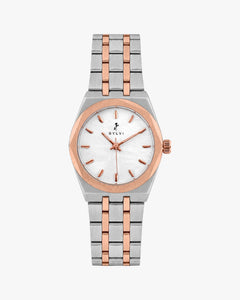
Sia White Rosegold Silver Steel
Rs. 2,329.00
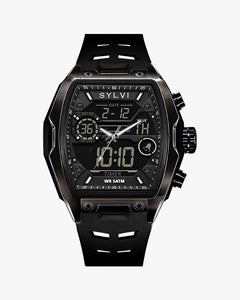
Vanguard All Black Silicone
Rs. 1,689.00
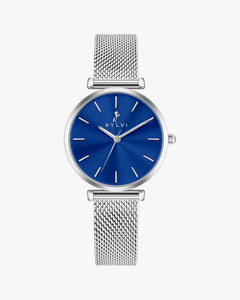
Serene Lavish Blue Silver Mesh
Rs. 1,699.00
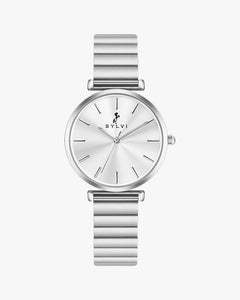
Serene Silver Link
Rs. 1,679.00

