






Made in India Watches: The Complete Buying Guide for Men, Women, Boys and Couples

Before you buy any watch, check four things: the movement (quartz or automatic), the water resistance rating, the case and strap material, and the actual warranty terms. Everything else in this guide is a longer answer to that short one.
We're writing this because "watch for men," "watch for women," "ladies watch brands," and "watch under 5000" all pull up the same wall of near-identical listings, and none of them tell you what you're actually looking at. So here's what to watch for, how men's and women's watches genuinely differ, what a couple watch should be, and why watches built in India deserve more than a passing glance.
What to Watch For Before You Buy
A watch is a small machine, and it's worth treating it like one instead of an accessory you pick by color.
Quartz movements run on a battery and don't depend on regular wrist motion to keep time, which is why they're generally considered the lower-maintenance option. Automatic movements are mechanical, wound by the motion of your wrist, and never need a battery — but they're more sensitive to how consistently the watch is worn, and a few seconds of drift a day is normal, not a defect. Japanese quartz has become the standard most Indian and international brands build around, largely for its accuracy and comparatively low servicing needs.
Water resistance ratings describe what the watch is built to handle, not a guarantee against every scenario. 3ATM is typically rated for light splashes, rain, or hand-washing — not swimming or submersion. Anything below that rating leaves less margin for accidental contact with water.
Case and strap materials are a reasonable predictor of how a watch ages, though actual wear depends on how it's used and where. Stainless steel and genuine leather tend to hold up better under daily use than plated alloy, which can peel over time, or PU straps, which are more prone to cracking with regular wear.
And warranty terms are worth reading in full, not skimming for the headline number. A clear, workable 1-year warranty beats a claimed three-year one with no actual claims process behind it.
Once you know what you're checking for, "watches" stops being a category you scroll through and turns into a spec sheet you compare.

Watches for Men: Analog, Automatic, and the Difference That Matters
Men's watches split into three real categories, not the fifty a marketplace filter suggests.
Analog is still the default, and it earns that spot. No app to open, no battery anxiety, nothing to sync before you leave the house. Run a men watches search and you'll get hundreds of near-identical dials, but the ones that tend to hold up over years share the same bones: a solid quartz movement, a case built to resist everyday scratches rather than show every one, a strap that's actually leather and not something styled to look like it.
Automatic is a different proposition. The movement is mechanical, dozens of small parts working off the motion of your arm, and building one well costs more than stamping out a quartz module. That's the honest reason "luxury watches for men" and "automatic watch" tend to get searched together. Wanting the mechanical-watch feeling without an import price tag isn't a compromise anymore. Indian-made automatics are a real category now, not a downgrade with better marketing.
watches are solving a third problem entirely: notifications, step counts, sleep data. They don't replace the first two, they sit alongside them, usually with a shorter usable life since batteries degrade and software support eventually stops. Most men who actually care about watches end up owning one of each, for different days.
Watch Under 5000: What's Actually Worth Buying
Every listing at this price looks similar in photos. What tends to separate a watch under 5000 you'll still wear in a year from one you'll shove in a drawer by March comes down to four things: battery life measured in days rather than hours you have to babysit, a display readable outdoors and not just under office lighting, heart-rate tracking that holds up during actual activity rather than only at rest, and a strap that survives more than a few months of daily wear.
None of that shows up in a product photo. Check the reviews before the price, because at this end of the market the spec sheet and the real experience don't always line up.
Watches for Women: What Ladies Watch Brands
The ladies watch category has shifted faster than the men's side. A decade ago, a watch for women commonly meant a men's design shrunk down and finished in rose gold. That's mostly changed. Several ladies watch brands now design around how women actually wear a watch day to day, rather than around how it photographs for a listing page.
Dial size relative to the wrist is worth checking first — as a general styling guideline, a dial noticeably larger than the wrist can look mismatched rather than intentional, though this comes down to personal preference too. Clasp type matters more than most buyers expect, since a secure deployant clasp tends to hold up better for daily wear than a decorative buckle. And a swappable strap earns its keep fast: it's the difference between one watch that moves from a work call to a wedding and three watches sitting in a drawer.
Built right, a watch for women should hold up to daily wear without the case or strap becoming the reason it gets replaced.
Watches for Boys: Buying the First One
Watches for boys is almost always a first-watch search, either a parent buying for a son or a teenager choosing one on their own. The instinct is to go cheap because it's "just a starter watch." That's backwards. A first watch also shapes whether watches feel worth caring for at all, and if it stops working within a couple of months, that's the lesson that sticks.
Look for a quartz movement from a named, traceable source rather than an unlabeled one. The strap should be sized properly rather than adjusted with an extra punched hole. And the warranty terms need to be simple enough that a teenager can use them without a parent translating the fine print first.
Couple Watch Sets: Matching Without Actually Matching
Couple watch searches spike around anniversaries, Valentine's week, and wedding season, and most sets on the market solve the wrong problem. They match the dial color and stop there, as if men's and women's wrists and taste were the same size and shape.
The better approach gives each person a watch they'd choose on their own, tied together through a shared finish, strap material, and design language, so the pair reads as a set without either half feeling like a compromise for the sake of matching.

Why "Made in India" Should Mean Something
Building a watch in India isn't the same as gluing an India sticker on a box of imported parts. Sylvi has designed and built watches out of Surat since 2015, and that claim only holds up if there's a process behind it.
Two things back that up, and neither is common in this category.
New Sylvi designs go through the Prototype Program before full production, where customer feedback on details like wrist comfort, clasp durability, and dial legibility in daylight feeds directly into design changes. It's a feedback loop, not a guess made in a meeting about what looks expensive.
Then there's Certified Imperfect. Some watches leave the production line with a small cosmetic flaw — uneven stitching on one strap batch, a faint mark on a case — while functionality and water resistance remain unaffected. Instead of scrapping them or quietly selling them as first-quality, Sylvi lists them separately with the flaw disclosed, the price adjusted, and the same 1-year warranty still attached.
That's what "Make in India" should mean in watchmaking: designed and tested here, and transparent about the pieces that didn't come out perfect.
Watch Shop Near Me vs. Buying Online
A watch shop near me search usually means one of two things: wanting to try a watch on before committing, or needing one fixed. Both are fair reasons, and neither rules out buying online for everything else.
For a first purchase, buying online works fine as long as the listing gives real numbers — movement type, case material, water resistance rating — instead of adjectives and a nice photo. For repairs, watch repair near me is worth searching no matter where the watch was bought, but check the warranty first. A watch still under warranty should generally go back to the brand rather than a local repair counter, since outside repairs can void it.
The Warranty Question
Every Sylvi watch carries a 1-year warranty covering movement and manufacturing defects. Whatever brand you're buying from, get the terms in writing before paying: what's covered, what voids it, how a claim actually gets processed. "Warranty included" on a listing page isn't a warranty by itself. A stated term with a real process behind it is.
FAQ
1. What should I check before buying a watch online?
The movement type (quartz or automatic), the water resistance rating, the case and strap material, and the exact warranty terms in writing — not just a "warranty included" line.
2. What's the real difference between an analog watch and an automatic watch?
An analog watch typically runs on a battery-driven quartz movement and needs comparatively little upkeep. An automatic watch runs on a mechanical movement wound by wrist motion, never needs a battery, and usually costs more because the movement itself is more complex to build.
3. Is a watch under ₹5,000 actually worth buying?
It depends on battery life, how readable the display is outdoors, and whether the strap survives daily wear past a few months. Check reviews for how the heart-rate and battery specs hold up in real use, not just the listed numbers.
4. What makes a good first watch for boys or a young buyer?
A quartz movement from a named, traceable source, a strap sized correctly rather than punched with an extra hole, and warranty terms simple enough to use without help.
5. What should I look for in ladies watch brands specifically?
Dial size proportional to the wrist, a secure clasp rather than a decorative buckle, and ideally a swappable strap so one watch covers both formal and casual wear.
6. Do couple watches need to look identical to work as a set?
No, and they usually shouldn't. A couple watch set that works shares a finish, strap material, and design language, while giving each person a dial and case shaped for their own wrist.
7. What does "Made in India" actually mean for a brand like Sylvi?
Design, testing, and finishing happening in Surat, not just final assembly. New designs go through the Prototype Program, where customer feedback shapes changes before full production, and Certified Imperfect discloses cosmetic flaws instead of hiding them — both backed by the same 1-year warranty as every other Sylvi watch.
Recommended Topics
Latest Watches
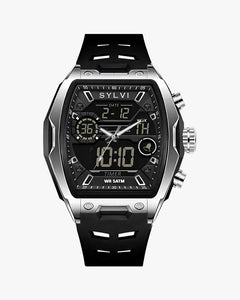
Vanguard Black Silver Silicone
Rs. 1,689.00
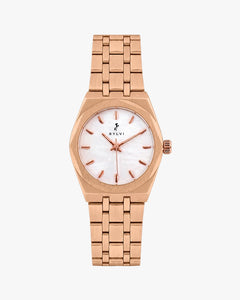
Sia White Rosegold Steel
Rs. 2,329.00
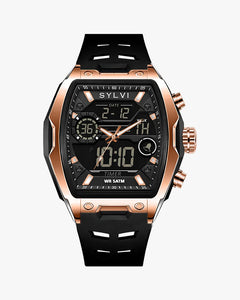
Vanguard Black Rosegold Silicone
Rs. 1,689.00
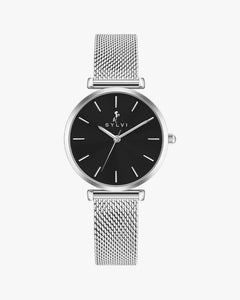
Serene Black Silver Mesh
Rs. 1,699.00

