






How Watches Are Made in India: Complete Guide

India’s watchmaking industry has undergone a dramatic transformation in the last decade. A market that was once import-based is becoming a significant hub for design, engineering, and assembly. Indian brands are marching forward with one objective: to create watches that appear elegant, have lasting appeal, and align with the Indian way of life. It is an evolving ecosystem which is not only driven by machines or manufacturing facilities, but people, designers, technicians, engineers, suppliers and craftsmen who are now interested in knowing how watches are manufactured in India, what the whole process looks like, and what makes Make in India watches different from imported ones. This step-by-step instruction solves all these questions and others. It explores how watches are made in India, explains how watches are made in India step by step India, and provides a human-level understanding of the craftsmanship behind every timepiece.
To make this more meaningful, we are also including a complete section on How Sylvi Watches Are Made in India, revealing how one of India’s fastest-growing value-luxury watch brands designs, engineers, assembles, and quality-tests its watches entirely within India. We will start at the tale's genesis.
1. The Evolution of Indian Watchmaking: From Imports to Innovation
Over many decades, the watch market in India was almost purely led by foreign brands. The nation essentially assembled imported components rather than producing them locally. However, all that changed when consumers began to demand products specifically designed for Indian needs. Indians desired watches that could withstand heat and humidity, withstand long hours of use, handle day-to-day commuting, and accommodate Indian dress, which most imported watches lacked.
Several factors increased the transition to Indian manufacturing:
- The growing pride of Indian people in homegrown brands prompted consumers to buy goods produced under the Make in India initiative, which aligns with local values.
- The cutting-edge technologies in CNC machining, dial printing, and case finishing enabled Indian factories to achieve global levels of precision.
- The availability of more designers, engineers, and technicians resulted in the emergence of in-house design and assembly departments.
- The government's moves under Make in India generated confidence and domestic production opportunities.
- Sylvi B2C brands succeeded in challenging old assumptions by offering modern, stable Indian products at value-luxury prices.
The synergistic effect of consumer demand, supply chain refinement and national efforts redefined the Indian watch-making industry.
The Indian watch of today is not a compromise; it is a bold product designed to meet both local and international requirements.
2. Understanding the Indian Watchmaking Ecosystem
Indian watchmaking does not refer to a single plant, but to a network. A watch may pass through designers, CNC machines, dial workshops, strap manufacturers, assembly labs, and QC stations before reaching a customer.
The ecosystem includes:
- Design studios that conceptualise the watch's shape, feel, and experience.
- Precise manufacturing units that craft cases, dials, crowns, hands, and clasps.
- Movement specialists who integrate Japanese or Swiss mechanisms with local cases.
- Assembly units staffed by trained technicians who install hands, fit gaskets, mount straps, and seal cases.
- Quality control departments test water resistance, accuracy, tension, and durability.
- Packaging and distribution hubs that prepare watches for safe, premium delivery.
It is this interdependent ecosystem on which the process of making watches in India relies, a strict, dependable, and more complex process.
3. How Watches Are Made in India: Step-by-Step Process (Complete Guide)
Here is the extended, plain guide on how watches are made in India: all the steps, from the idea to the wrist.
Step 1. Concept & Design (Where Every Watch Begins)
The beginning of everything is design. In designing any metal or any dial, designers have to answer one big question:
What value will this watch have to an Indian customer?
Designers consider:
- Indian tastes in dial size, as most purchasers prefer large, transparent displays.
- Complementary colours to the Indian skin, including olive, brown, beige and warm metallics.
- Visual styles that match office wear, festive attire, college outfits, and daily routines.
- Comfort factors such as wrist shape, strap material, and long-hour wearability.
- Climate conditions, including heat, humidity, sweat, and dust, influence durability.
At Sylvi, design development is a rigorous process.
It involves doodling hundreds of concepts, turning them into computer-aided design models, performing ergonomic analysis, and muting design variations until one feels they are comfortable, timeless, and Indian life-appropriate.
This is the innovative and strategic background of the manufacturing of watches in India.
Step 2: Prototyping & Engineering (Turning Ideas Into Real Objects)
Design becomes practical through prototyping. Engineers convert sketches and models into physical samples that reveal how the watch truly behaves.
Prototyping includes:
- CNC-machined case samples that validate the shape, thickness, and weight of the model.
- Mock-ups that verify the presence of the wrist, the curve, and wearability, 3D-printed.
- Dial experiments which test textures, matte finishes, sunburst and readability.
- Strap-fitting tests to assess whether the strap sits well on Indian wrist shapes.
- Crystal tolerance checks that confirm sealing strength and protect the movement from dust and moisture.
Sylvi's Prototype Program enables actual customers to sample the watch before mass production. They can use it in their daily life with travelling, working, sweating, running errands and give honest feedback that is taken into consideration by engineers to make the final version better.
With this integration of the user's insight, Sylvi's production is remarkably grounded and reliable.
Step 3: Material Sourcing (Choosing The Right Building Blocks)
The choice of materials is essential because it determines comfort, durability and longevity.
India has a challenging climate, and one should be careful when choosing materials.
Most Indian watchmakers, including Sylvi, use:
- 316L stainless steel is used for its corrosion resistance and ability to retain its finish in humid environments.
- Japanese quartz movements are popular because they offer accuracy, stability, and reliability with very low maintenance.
- Brass dials with multi-layer finishes to create depth and visual richness.
- Hardened mineral crystal that protects the dial from scratches and daily wear.
- Straps made from silicone, leather, mesh, nylon, or steel, sourced mainly from Indian manufacturers for better comfort.
One of the most significant aspects of how watches are made in India is material sourcing, as all components must withstand the local climate and usage trends.
Step 4: Component Manufacturing (Precision at Every Step)
A watch consists of many small components, each built to precise tolerances.
The paper will discuss the process of producing these parts in India.
A. Case & Bracelet Manufacturing
- The case is cut from 316L steel using CNC machines, ensuring absolute accuracy.
- Cases are polished through several steps to eliminate flaws and achieve a smooth, high-end finish.
- Finishing techniques such as brushing and mirror polishing add visual depth and texture.
- PVD plating provides a stable colour finish in black, rose gold, and gunmetal.
B.Dial Manufacturing
- Dial bases are stamped with brass sheets with correct dimensions.
- Heat and pressure are used to apply textures such as sunburst, matte, or grain patterns.
- Printing of markers, numbers and branding is done using high-precision machines.
- Robotic arms place each index to ensure perfect alignment.
C. Hands & Crown
- The hands are cut, polished, and shaped to achieve balance from the steel sheets.
- Lume is applied when needed for visibility in low light.
- Crowns are cut to make them turn smoothly and be highly water-resistant.
This stage highlights industrial craftsmanship—where engineering meets artistry.
Step 5: Movement Integration (The Heart of the Watch)
There is no step-by-step guide to watching production in India that covers integrating movements.
Quartz movements are a preferred choice in India due to the following reasons:
- Provide timekeeping with high accuracy.
- Minimal maintenance requirements.
- Works well in the changes in Indian climates.
- Have a long battery life.
- Are cost-efficient
Movement installation incorporates:
- Scheduling the movement in a holder so that it does not move around.
- Align the dial carefully so that the markers and hands line up perfectly.
- Install the hands under magnification to avoid friction or collisions.
- Securing the crown stem and ensuring smooth setting action.
- Inserting and testing the battery for consistent power flow.
- Adjusting the movement to be precise and soft ticking.
This is a delicate process that requires steady hands and careful consideration.
Step 6: Strap Crafting (Comfort That Lasts All Day)
A strap can turn a watch into a weightless object, and a poor-quality strap can make even a high-quality watch unpleasant.
Strap making in India encompasses:
- Flexibility and sweat resistance: Moulding of silicone straps.
- Sewing up leather straps, which have a strong stitch at the edges.
- Straining the nylon straps to make them tighter for outdoor sports and movement.
- Installation of either stainless steel or mesh straps is required to ensure a well-dressed, presentable appearance in the office.
Each strap undergoes:
- Flexibility testing
- Pull-strength testing
- Sweat exposure testing
- Comfort in long hours assessment.
Straps should be suitable for the lifestyle of the Indians- functional, comfortable, and climate-appropriate.
Step 7: Final Assembly in India (A Grand Assembly of all Pieces)
The watch is made complete at assembly.
Technicians are employed in hygienic environments free of dust and moisture.
The process includes:
Fitting the hands to be controlled to prevent bending.
- Installing the movement and dial into the case without contamination.
- Application of gasket rings to press the crystal into place to ensure it is sealed.
- Sealing the case up with accurate torque to ensure Water Resistance
- Install the strap or bracelet firmly and securely.
- Testing all functions, including date, chronograph, alarm, and illumination.
Assembly is both scientific and delicate—it defines how the watch feels on your wrist.
Step 8: Quality Control & Testing (Ensuring Every Watch Is Perfect)
Indian consumers expect value, reliability, and durability. QC teams ensure that each watch meets those expectations.
Testing includes:
- Magnification through visual inspection.
- Dust and scratch checks
- Checking of dial and hand positions.
- Water resistance (usually 3ATM)
- Drop and vibration tests
- Movement stability test of accuracy.
- Tensile check strap and bracelet.
- Test of every feature functionality.
Those watches that pass all tests are only transferred to packaging.
Step 9: Packaging & Distribution (Delivering the Final Experience)
A great unboxing experience is also another concern of Make in India watches.
Packaging includes:
- Premium finish, separable, rigid or magnetic box.
- Shock absorbing to safeguard the watch during transportation.
- Warranty card and user manual.
- Design and care brand booklet.
- To guarantee authenticity, a quality seal.
Watches are then shipped to warehouses, shops, or shipped directly using websites such as Sylvi.in.
4. How Sylvi Watches Are Made

Sylvi is one of the fastest-growing value-luxury watch brand in India. Its manufacturing model blends in-house assembly, collaborative manufacturing partnerships, and a strong commitment to Indian craftsmanship.
1. Design Development at Sylvi
Sylvi has the right start in understanding the Indian customer, and hence all the models are appropriate for Indian wrists, colours, and fashion.
Development of design involves:
- Research on Indian lifestyle and fashion trends to know what people want to receive in a watch.
- Sketching initial silhouettes for case, dial, and strap options based on current trends and future projections.
- Designing accurate 3D CAD models that model wearability, weight distribution and visual balance.
- Digital modelling assessment of wrist comfort on height, thickness, and case curve.
- Selecting colour, material and finish (CMF) combinations to match the Indian skin tone and usage.
The design team will continue to work until the watch feels good, but not simply looks good.
2. The Prototyping and Engineering at Sylvi.
Upon approval of the design, engineers create the first physical model of the watch.
This includes:
- CNC-optimised case samples, which test dimensional and structural integrity.
- Prototyped 3D-printed plastic models of prototypical sizes were tested to assess the presence of the wrist.
- Carry out dial texture and printing tests to complete the appearance and finish.
- Strapping to guarantee comfort in the long term during the Indian routines.
- Is the verification of crystal height and gasket tolerance water-resistant?
In the Prototype Program, Sylvi provides access to prototypes earlier so customers can experience their durability, comfort, and style.
3. Material Sourcing For Sylvi Watches
Sylvi uses high-quality materials sourced through trusted partnerships with Indian and global suppliers.
Materials include:
- Stainless steel cases and bracelets are 316L, which are strong and highly rust-resistant.
- Quartz movements from Japan are known for their accuracy and performance.
- Brass dials are completed using multi-layered textures to add coherence and depth.
- Hardened mineral glass selected for scratch resistance and daily practicality.
- Indian-made straps in silicone, nylon, mesh, leather-style, and steel.
The materials used emphasise climate consideration, comfort, and value.
4. Component Manufacturing for Sylvi
Sylvi ensures each component is produced with discipline and accuracy.
Case & Bracelet
- Precise shapes are achieved by CNC milling.
- Several polishing stages are used to perfect the finish.
- Mirror-polished or brushed at the visual level.
- Long-lasting colour PVD coating.
Dial
- Stamped brass dial bases
- Ground deliquescence uses textures and patterns.
- Printed markers & branding
- Robotic index placement
Hands & Crown
- Precision-cut hands
- Buffed finishes to give greater gloss.
- Lume (when required)
- Water resistance machined crown tubes.
5. Movement Integration at Sylvi
One of the most sensitive tasks is movement integration.
It includes:
- Caution in installing the Japanese quartz movement into a protective casing.
- Setting the dial correctly so that it is perfectly positioned.
- Fitting the hands with Swiss-grade tools to keep them straight and not bent.
- Making the crown stem fastened and the setting action flow smoothly.
- Adding the battery and conducting power tests for stable functioning.
- Testing the motion to ensure accurate timekeeping.
6. Assembly in India (Sylvi’s Final Build Phase)
The production process involves:
- Installation by hand with friction avoided by using controlled pressure.
- Positioning dials and movements within the case using the dust free method.
- Glass pressing with gasket rings to make sure it is sealed.
- Final case back closing with precise torque.
- Strap installation with reinforced locking mechanisms.
- Function testing for all watch features.
This action makes the watch come to life.
7. Quality Control/Testing at Sylvi.
Sylvi practices stringent QC practices:
- Physical checks of the dial, hands, strap, and case, covering all details.
- Up to 3 ATM of water resistance, depending on the model.
- Drop and vibration test to replicate the daily wear and tear.
- Movement performance is verified through accuracy testing.
- System tests involving battery and power to develop uniform ticking.
- Strap tensile testing to ensure strength and durability.
Only flawless watches pass.
8. Sylvi Packaging and Distribution.
Every single Sylvi watch will come with:
- A metallic or rigid high-end box.
- Internal cushioning of the protections.
- A detailed user manual
- A warranty card
- Brand booklet of the Sylvi journey.
- An authenticity safety seal.
Sylvi distributes via its official site and partner marketplaces.
5. Why Make in India Matters
Many consumers want to understand why Make in India is essential and what the real advantages of Make in India are.
A. Built for the Indian Climate
Indian conditions are not gentle—heat, humidity, sweat, dust, and constant wrist movement. Make in India watches are developed around these realities.
B. Selection According to Indian Taste.
Bigger dials, brighter colours, legible fonts, and straps that do not pinch are things Indian consumers prefer.
These instincts are well comprehended in Indian brands.
C. Less Expensive Without Reducing the quality.
Make in India reduces the number of cost levels, imports, logistics, and foreign taxes, and offers superior products at superior value.
D. Employment & Skill Growth
Local watchmakers are in favour of designers, machinists, technicians, packagers and QC personnel.
E. Promoting Sustainable Practices.
In a way that makes Indian brands produce locally, it helps in the reduction of import waste and makes production more responsible.
Software such as Certified Imperfect by Sylvi will further minimise material waste.
F. Why Make in India Started
The project aimed to enhance economic self-sufficiency, boost local industry, and assist local brands in competing internationally with innovative, locally tailored products.
Make in India is no longer merely a motto; it is a new industrial image.
6. Watchmaking Industry in India Future (Expert Insight).
- The future of the watchmaking industry in India is bright.
- This is what the coming decade is likely to bring:
- Mechanical movements of Indian origin, more.
- Increased manufacture of local components.
- Artificial intelligence-based design and online prototyping.
- Increase in the use of sustainable resources.
- Exports of Indian watch brands around the world.
- More effective watch design incubation.
- Greater hybrid and innovative technologies.
Brands such as Sylvi will be highly influential in shaping the future of new Indian watches.
7. How Watches Are Made in India: Quick Summary (For Readers Who Prefer Short Answers)
Below is a concise version using long-tail keywords naturally:
- Designers create watch concepts and digital models, laying the foundation for how watches are made in India.
- Prototypes are built through CNC machining and 3D printing, explaining how watches are made in India.
- Material selection focuses on climate suitability, forming a key part of how watches are made in India.
- Dial, case, hands, and straps are manufactured through specialised operations as part of the guide on how watches are made in India.
- Movements are installed with precision to complete how watches are made in India step by step India.
- Final assembly and QC ensure reliability in Indian conditions.
This Short version gives new readers an easy understanding.
8. FAQs
1. How exactly are watches manufactured in India?
Onboard, it involves designing, prototyping, sourcing materials, producing components, transporting to installations, assembling, conducting quality checks, and wrapping it all for the Indian climate and lifestyle.
2. Do the Sylvi watches entirely have their manufacturing in India?
Yes. Sylvi designs, manufactures, tests, and completes its watches in India, using a mix of Indian and global quality standards.
3. What are the key benefits of Make in India watches?
They provide improved climate suitability, greater resistance, the creation of employment opportunities, and domestic innovation, but at the expense of reliance on foreign brands.
4. What is the entry of Make in India in the watch industry?
It started with the rise in production technology, and Indian shoppers demanded a local style, as administered by the government's Make in India initiative.
5. The simple explanation of how watches are manufactured in India?
The design of a watch, its prototyping, its manufacturing, assembling, testing, and packaging are all done in India, using materials and engineering appropriate to India.
Recommended Topics
Latest Watches
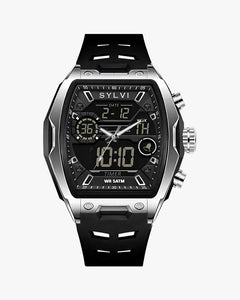
Vanguard Black Silver Silicone
Rs. 1,689.00
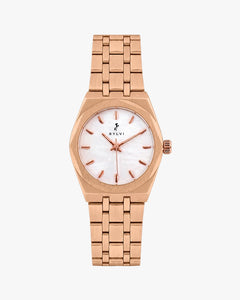
Sia White Rosegold Steel
Rs. 2,329.00
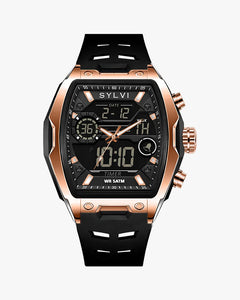
Vanguard Black Rosegold Silicone
Rs. 1,689.00
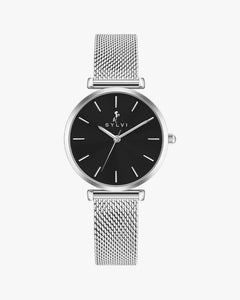
Serene Black Silver Mesh
Rs. 1,699.00

